
Arizona
Building Automation Systems in Arizona
- Statewide
- BAS retrofits
- Multi-site standards
- Commissioning
- Lighting integration
- Open protocol
Why statewide matters
Arizona is not one climate, and controls should not pretend it is
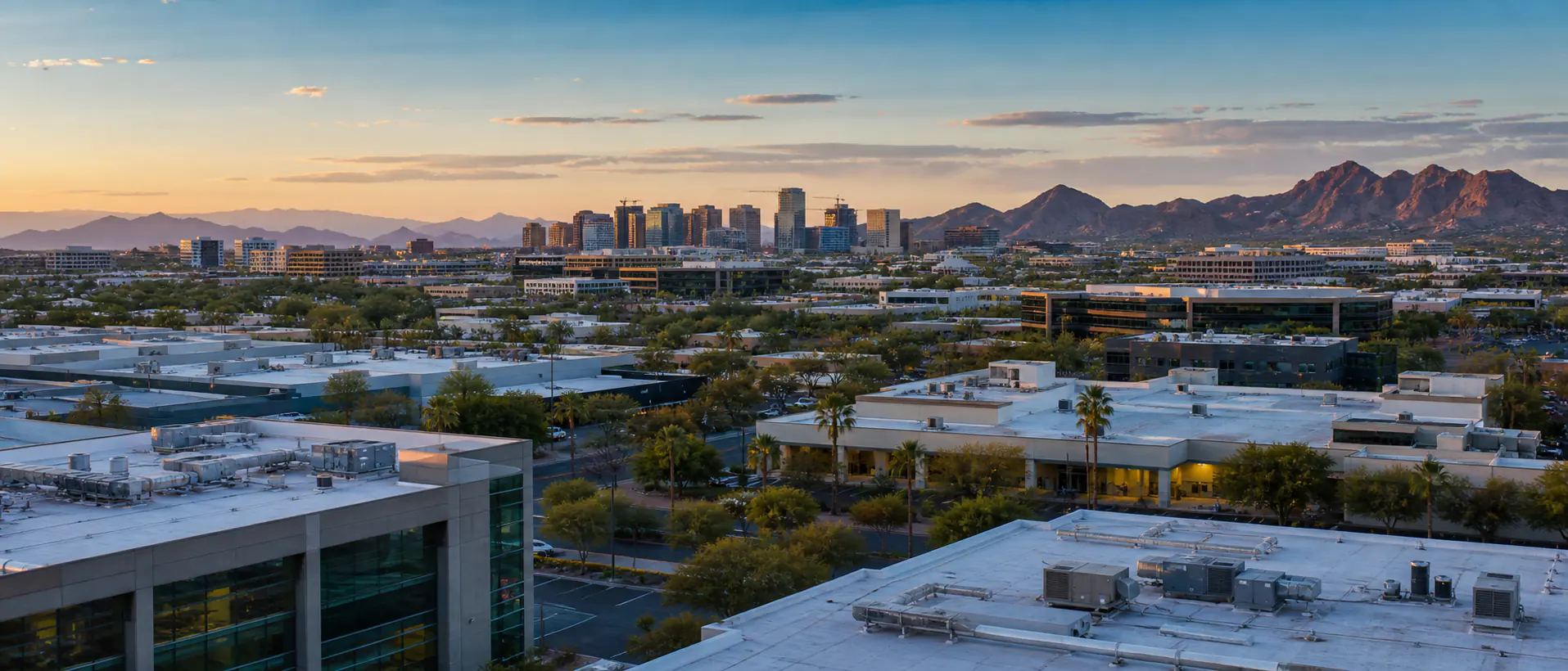
A portfolio with buildings in Phoenix, Tucson and Flagstaff is operating across three genuinely different design conditions. The Valley is cooling-dominated nearly year-round with expensive peak demand. Tucson sits higher, with real winter heating and a larger overnight swing that makes night flush worth using. Flagstaff carries snow loads, sustained freezing temperatures and freeze-protection requirements that barely exist two hours south.
Applying one sequence across all of them — which happens more often than it should when a portfolio standard is written by someone based in a single market — produces buildings that are uncomfortable, wasteful, or both.
The right approach is a common framework with regional variation: the same point naming, graphics conventions, alarm priorities and documentation standard everywhere, with sequences tuned to the climate zone each building actually sits in.
Statewide capability
What we deliver across Arizona
- Building automation system design, replacement and expansion
- DDC controls for packaged, built-up and central plant equipment
- Multi-vendor integration across BACnet, Modbus and gateways
- Commercial lighting controls and BAS integration
- Controls engineering, sequences, programming and graphics
- Point-to-point checkout and functional performance testing
- Retro-commissioning of existing systems
- Energy management, scheduling and reset strategy
- Portfolio controls standards for multi-site operators
- Documentation rebuilds and owner training
- Preventive maintenance and remote support
- Controls troubleshooting and repair
Regional strategy
How the approach changes across the state
Phoenix metro — cooling dominated
Emphasis on condenser and chilled-water plant behaviour, staging discipline, peak-demand management and avoiding coincident restarts. Limited economizer value.
Tucson & southern Arizona
Larger overnight swing makes night flush and economizer genuinely useful. Real winter heating loads. Monsoon humidity and power-event restart behaviour need attention.
Flagstaff, Prescott & high country
Sustained freezing conditions, freeze protection as a hard safety, morning warm-up strategy, and seasonal occupancy patterns that scheduling must reflect.
Yuma & the southwest corner
The most extreme cooling loads in the state, with equipment sizing and staging strategy that has very little tolerance for a sequence written for milder conditions.
Multi-zone portfolios
One documentation and naming standard, one alarm philosophy, one graphics convention — with regionally appropriate sequences underneath.
Statewide project delivery
Retrofits, new installations and commissioning scheduled as projects, with travel scoped openly in the proposal rather than added later.
Coverage
What statewide means in practice
Our densest coverage is the Phoenix metro, where most service and assessment work is handled. Tucson and southern Arizona are covered for project work and scheduled service. Northern and outlying locations are supported for projects and planned visits, with coverage confirmed per project rather than assumed.
We do not operate branch offices in every city, and we would rather say so than imply a local presence we do not have. What matters for your building is whether a qualified controls technician can be there when you need one — and we will give you a direct answer about that for your specific location.
See the full service area breakdown, or the market pages for Phoenix and Tucson.
Questions
Frequently asked questions
Next step