
Property Managers & Multi-Site Operators
Controls Partner for Property Managers & Multi-Site Operators
- Portfolio assessments
- Standardized graphics
- Remote access
- Trend review
- Service coverage
The portfolio problem
Ten buildings, six controls platforms, no common standard
Portfolios accumulate controls systems the same way they accumulate buildings — one acquisition, one tenant improvement, one emergency replacement at a time. The result is a set of facilities that each work somewhat differently, with different graphics conventions, different alarm behaviour, different remote-access arrangements and different vendors.
The cost of that shows up as time: every issue starts with figuring out which system this building has and who to call. Standardizing does not mean replacing everything. It means agreeing on a target — for naming, graphics, alarm handling, documentation and access — and migrating toward it as equipment reaches end of life.
Portfolio capability
What we provide across multiple facilities
- Portfolio-wide controls assessments
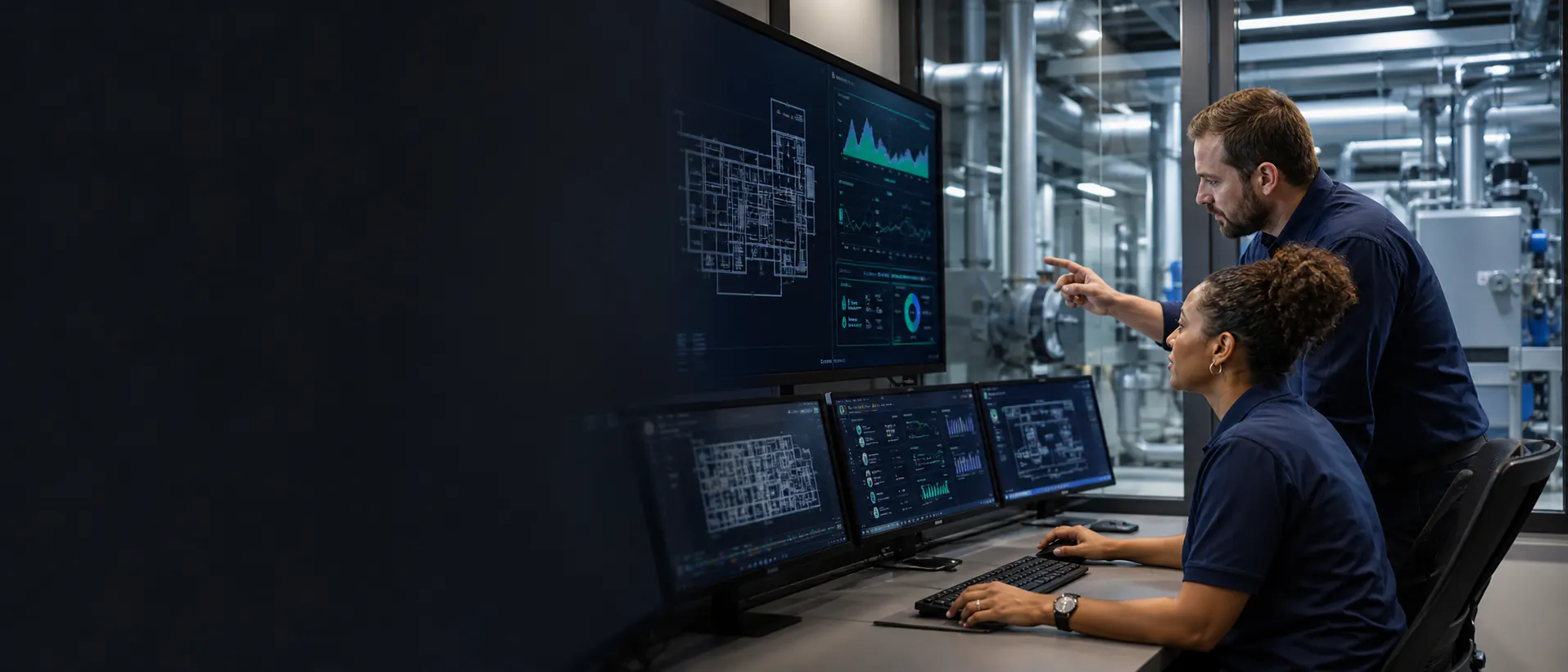
- Standardized controls and graphics strategies
- Remote building access and monitoring
- Equipment integration
- Programming and scheduling optimization
- Graphics and operator dashboards
- Startup and troubleshooting
- Commissioning and functional verification
- Trend review and operational diagnostics
- Facility-team training
- Ongoing service and preventive maintenance
- Lighting controls standardization across sites
Standardization
What a portfolio standard actually specifies
Point naming convention
One naming scheme across every site, so trends and reports can be compared building to building without translation.
Graphics conventions
The same navigation structure, colour meaning and equipment layout at every property.
Alarm priorities & routing
A common definition of what constitutes each priority level, and who each one goes to.
Schedule structure
A consistent approach to occupied hours, holidays, overrides and tenant requests.
Remote access standard
One agreed method for connecting to each site, coordinated with IT, rather than per-building improvisation.
Documentation baseline
The same set of documents held for every property: points list, sequences, drawings, device inventory, backups.
How we work with portfolios
An operating model, not a one-off project
Baseline assessment per site
Each property surveyed and scored on system condition, supportability, documentation and risk.
Prioritised across the portfolio
Capital and service recommendations ranked across all sites, so budget goes where risk actually is.
Consistent reporting
The same review format for every property, so year-over-year comparison is possible.
Remote first response
Where access exists, issues are triaged remotely before dispatch — faster resolution and fewer truck rolls.
Scheduled trend review
Periodic review of runtime, alarms and overrides across sites, so drift is caught rather than reported by a tenant.
One point of contact
A single team accountable for the portfolio rather than a different vendor relationship per building.
Questions
Frequently asked questions
Related capabilities
Next step