
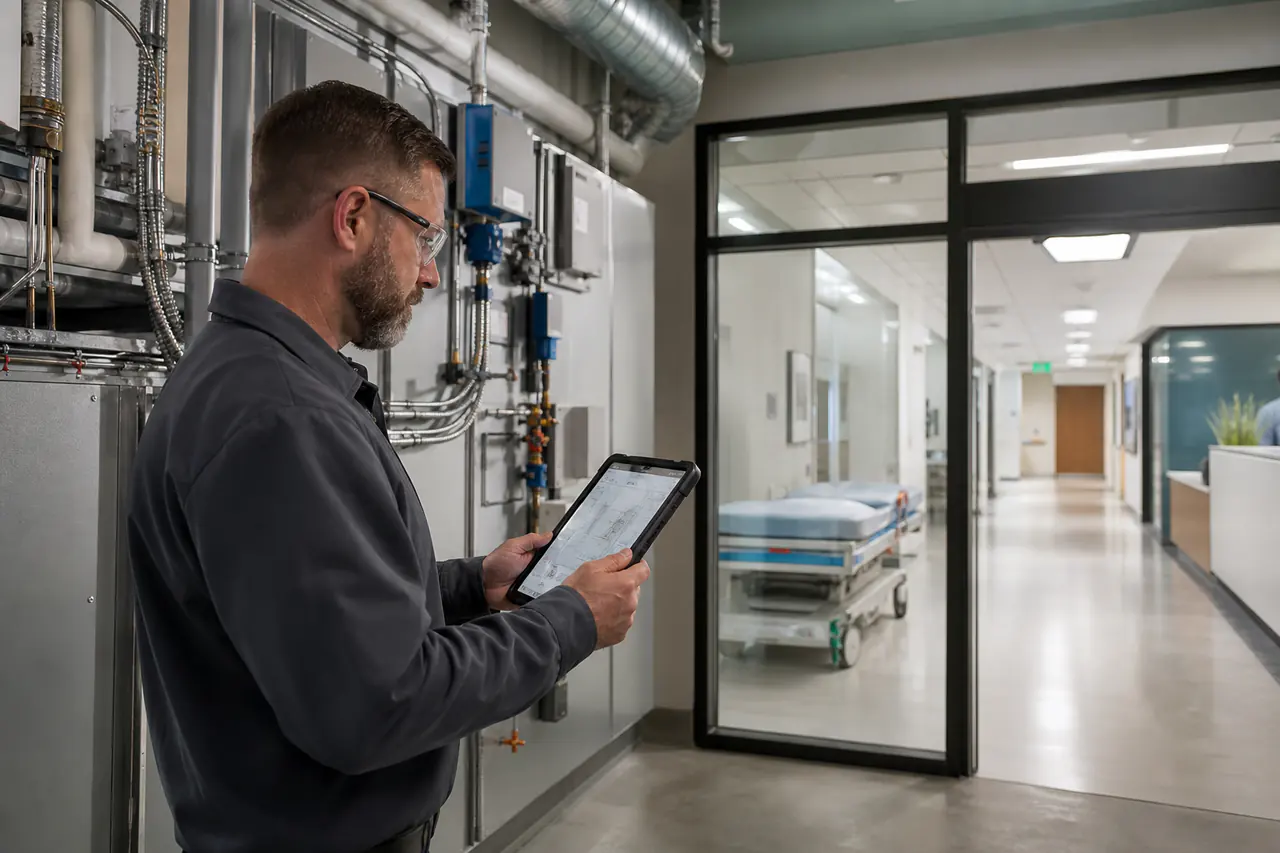
Controls Commissioning
Controls Commissioning & Functional Performance Testing
- Point-to-point
- Functional testing
- Trend review
- TAB coordination
- Deficiency closure
Why it matters
Commissioning is where you find out whether any of it is true
A controller can report 55°F supply air on a perfect-looking graphic while the sensor is reading return air, the damper is stuck at 20%, and the economizer has never once opened. Nothing in the system announces that. Testing is the only thing that finds it.
Commissioning is not a formality at the end of a project. It is the step that converts an installed system into a system you can trust — and it is the step most often compressed when a schedule slips.
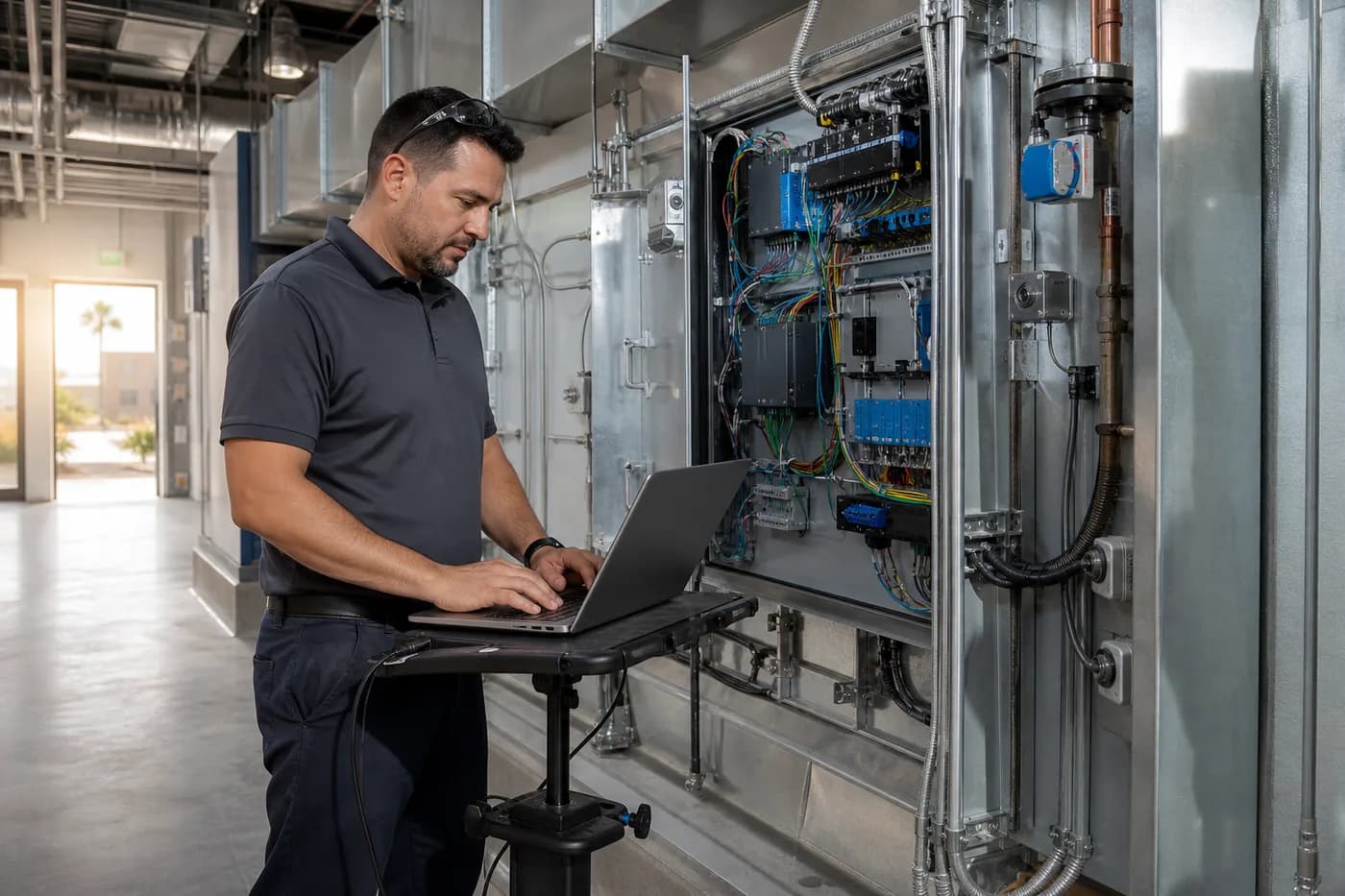
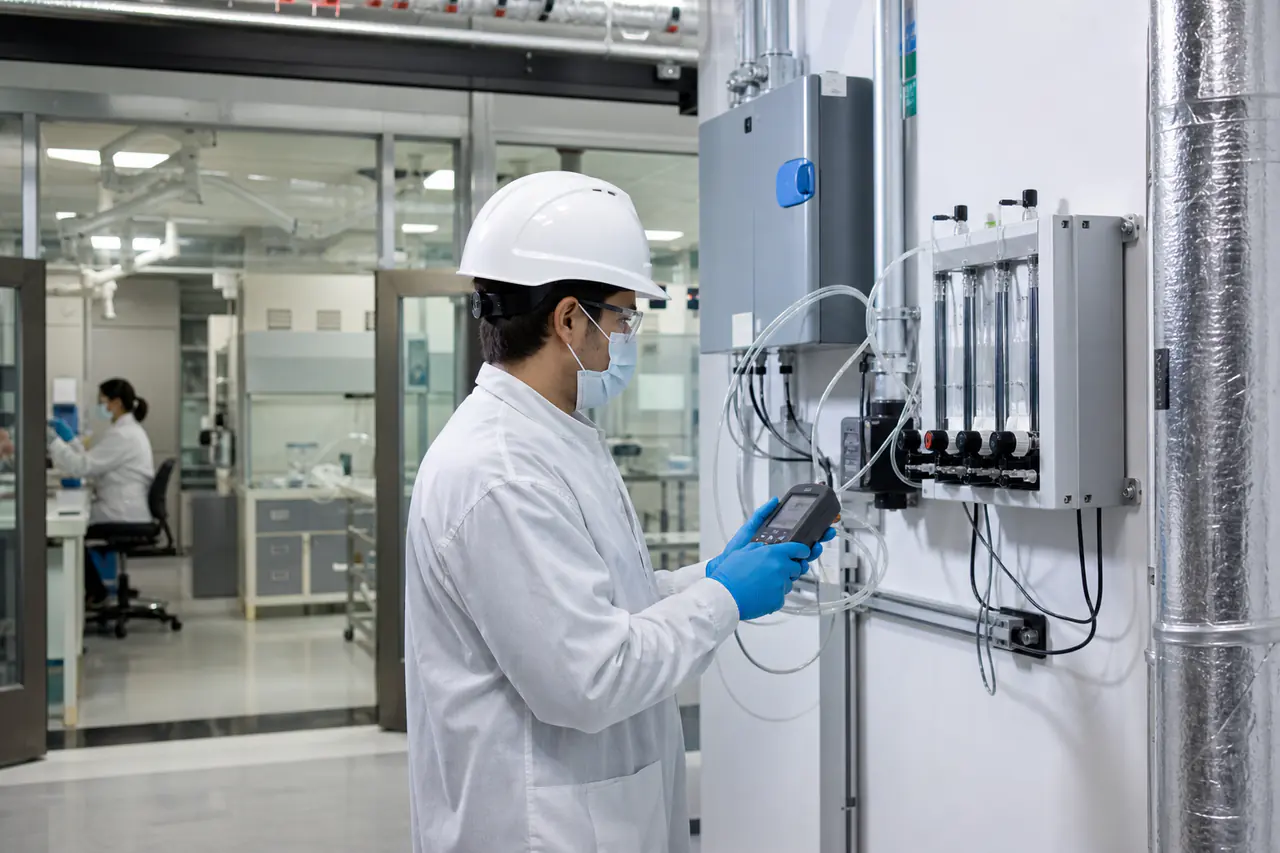

Commissioning scope
What we test
- Point-to-point verification
- Sensor calibration and reasonableness checks
- Actuator stroke verification
- Command and status verification
- Interlock testing
- Alarm verification
- Schedule verification
- Sequence testing across operating modes
- Trend review over a meaningful period
- Functional performance testing support
- TAB coordination
- Deficiency tracking and closure
- Re-test after correction
- Owner turnover and training
Deliverables
What you receive
Points verification record
Every point checked, its as-found state, and the correction where one was needed.
Issue / deficiency log
Each finding with its system, severity, responsible party, correction and closure date.
Sequence test report
The mode tested, the expected behaviour, the observed behaviour and the result.
Trend report
Recorded data over the test period showing the system holding — or not holding — its sequence.
Deficiency closure summary
What was found, what was fixed, what was accepted as-is and why.
Owner training record
Who was trained, on what, and what reference material they were given.
How it runs
Commissioning sequence
Pre-functional review
Confirm installation is complete, devices are powered and communications are up.
Point-to-point checkout
Verify each input against a reference and each output against the device it moves.
Calibration & stroke checks
Sensors verified against a calibrated instrument; actuators stroked full range.
Safety & interlock testing
Freeze protection, high-static, smoke interlock and equipment proof tested by simulating the condition.
Sequence functional testing
Each operating mode driven and the response recorded against the approved sequence.
Alarm & schedule verification
Alarms triggered deliberately; schedules verified against the occupancy calendar.
Trend period
Data collected long enough to expose behaviour that only appears under real load.
Deficiency correction
Findings assigned, corrected and re-tested — not simply logged and closed.
Turnover & training
Documentation package delivered and facility staff trained on the system as it now behaves.
Existing buildings
Commissioning a system that has been running for years
Retro-commissioning starts from a different place than new construction: the building works, more or less, and nobody wants it disturbed. The value is in finding the drift — overrides left in place after a service call, schedules that no longer match occupancy, sensors that have wandered out of calibration, resets tuned around a problem that was solved years ago.
We scope this around your operations, test in windows you approve, and prioritise findings by what they cost you rather than by how interesting they are technically.


Questions
Frequently asked questions
Related capabilities
Next step