
Controls Installation
Commercial Controls Installation
- Panel builds
- Controllers
- Sensors
- Actuators
- Low-voltage wiring
- Network trunks
Field quality
The install decides how serviceable the system is for the next decade
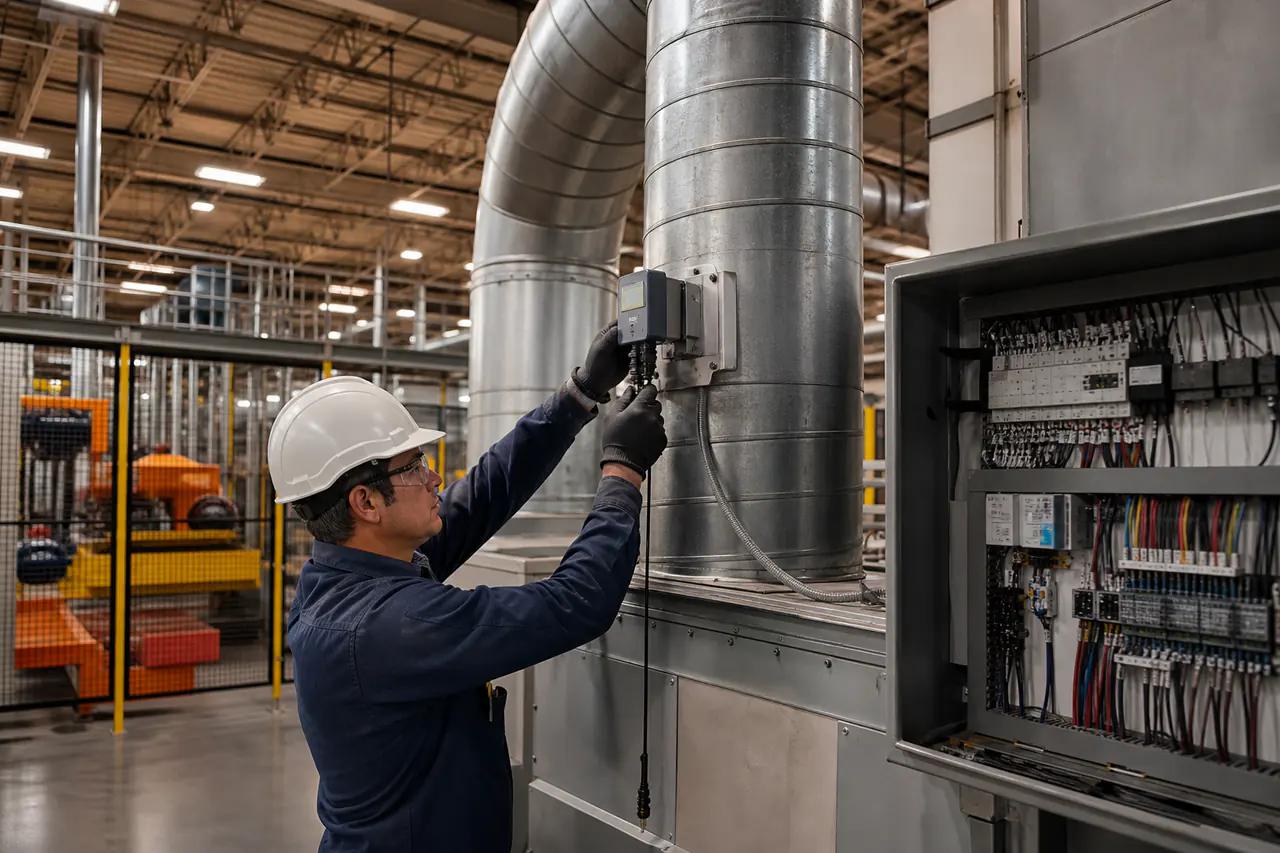
Every difficult service call we take started as an installation decision. An unlabeled trunk, a sensor mounted where it reads the wrong air, a panel with no room to land a future point, a device wired but never recorded on a drawing — these are the things that turn a twenty-minute diagnosis into a half-day of tracing wire.
We install to a documented standard: consistent labeling, consistent point naming, panels laid out for future expansion, and a record set that matches what is physically in the building.
Installation scope
What we install
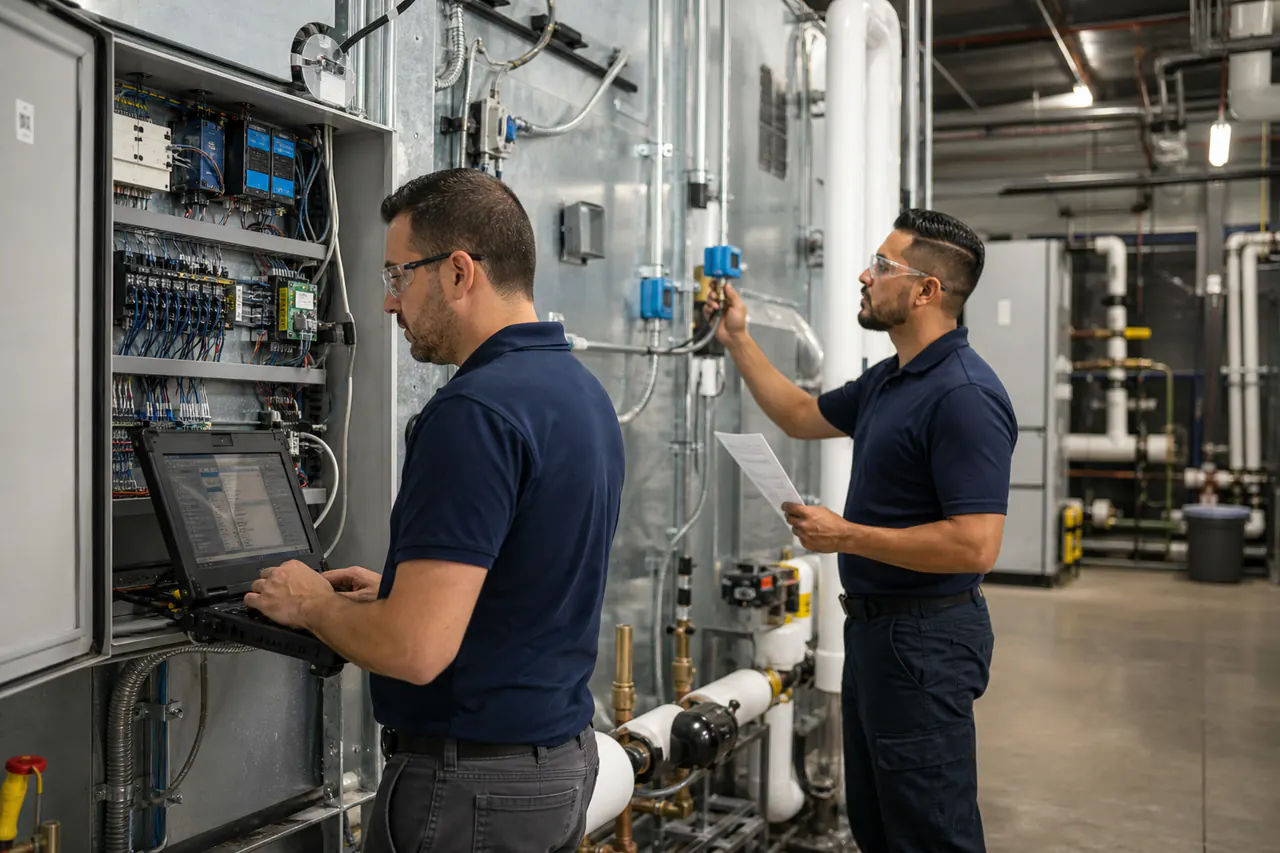
- Control panels and enclosures
- Controllers and expansion modules
- Sensors and transmitters
- Actuators and damper motors
- Thermostats and room sensors
- VFD interfaces
- Low-voltage controls wiring
- Network trunks and terminations
- Equipment interlocks
- Labeling and point identification
- Startup support
- Record drawings, system documentation and owner turnover package
Project delivery
How a controls installation runs
Estimate & scope review
Agree what is included, what is excluded and what is still unknown.
Design review & owner approval
Points list, sequences and controller selection reviewed before anything is ordered.
Facility-team coordination
Access, shutdown windows, tenant impact and any issues found during walkthrough.
Procurement
Long-lead items identified early so the schedule reflects reality.
Panel build & device staging
Where applicable, panels built and tested before they reach the site.
Rough-in & wiring
Conduit, cable, trunks and terminations installed and labeled as they go.
Device installation
Sensors, actuators and controllers mounted where they will read and act correctly.
Programming
Database, logic, graphics, schedules, alarms and trends built to the approved sequence.
Startup
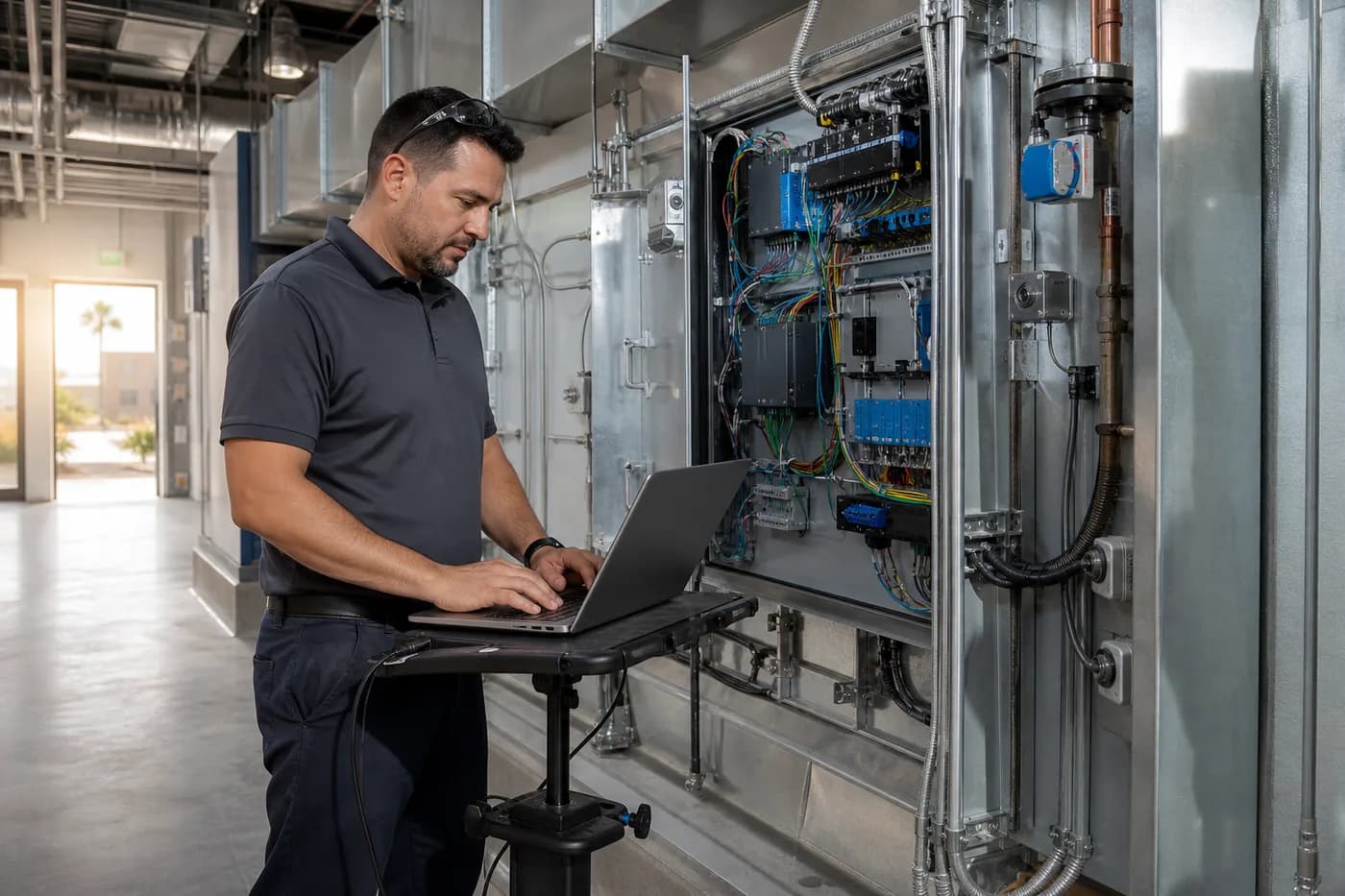
Power-up, communications verification and initial equipment operation.
Point-to-point checkout
Every input verified against reality; every output verified to move the device it commands.
Functional testing / commissioning
Sequences tested across operating modes, deficiencies logged and closed.
Owner training
Time with the people who will operate it, on the system as installed.
Turnover & warranty
Documentation package delivered, warranty terms confirmed, service path established.
Occupied buildings
Working in a building that cannot stop
Phased cutover
Work broken down by floor, air system or plant so no single outage affects the whole facility.
Scheduled shutdowns
Outage windows agreed in advance with the facility team, with a defined rollback if something does not come back up.
Temporary operation
Where a system must run during transition, we plan how it runs before the old controls come out.
Clear site conduct
Badging, escort requirements, work areas and daily cleanup handled to your standard, not ours.
Daily status
The facility team knows what changed each day and what is scheduled next.
Documented as-built
Field changes captured as they happen rather than reconstructed at the end.
Questions
Frequently asked questions
Related capabilities
- Controls Engineering & ProgrammingDrawings, sequences and logic
- Controls CommissioningPoint-to-point and functional testing
- Building Automation SystemsThe system being installed
- Controls Retrofits & BAS UpgradesReplacing existing controls
- Commercial HVAC ControlsEquipment-level control
- Controls Service & RepairSupport after turnover
Next step