
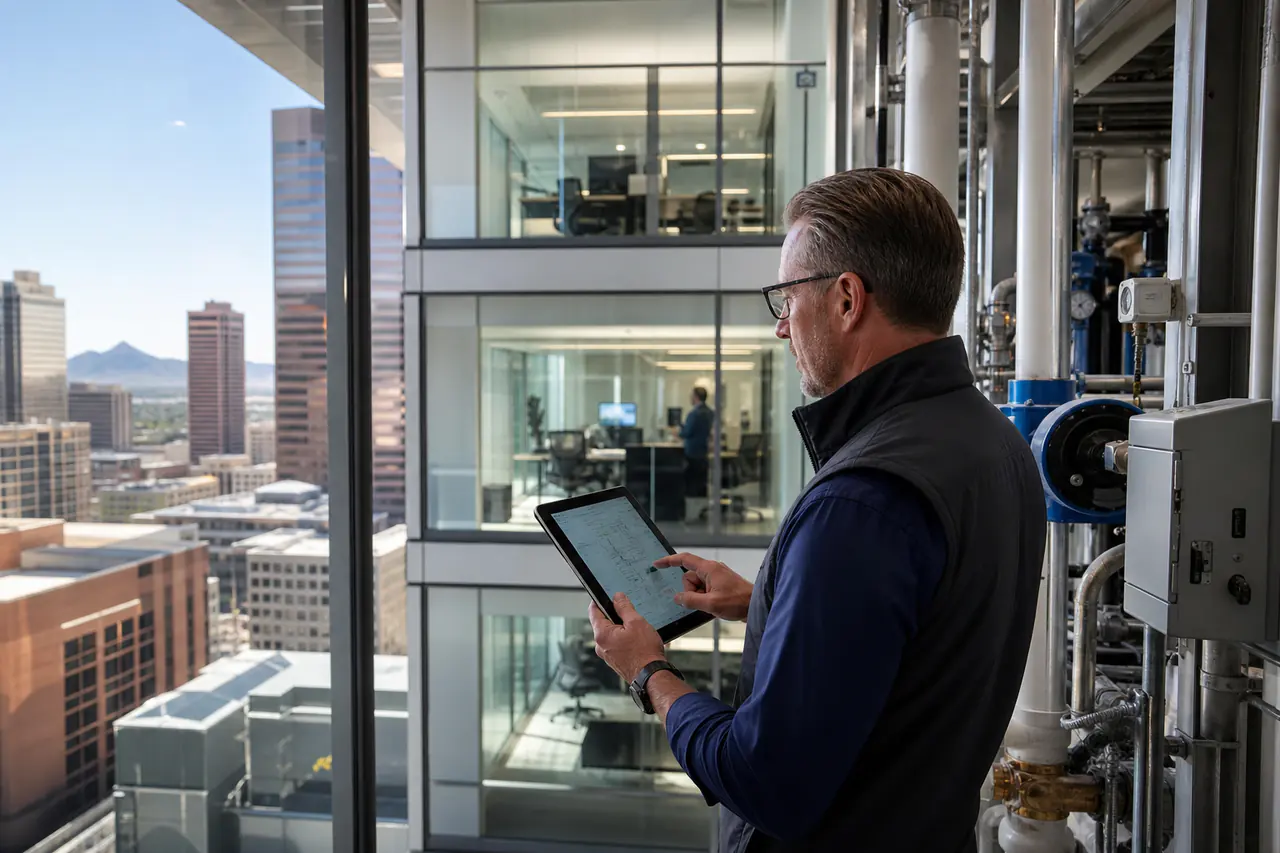
Phoenix, Arizona
Building Automation Systems in Phoenix, AZ
- BAS retrofits
- DDC controls
- Economizer strategy
- Demand management
- Central plant
- Lighting integration
Local conditions
What makes controls work different in Phoenix
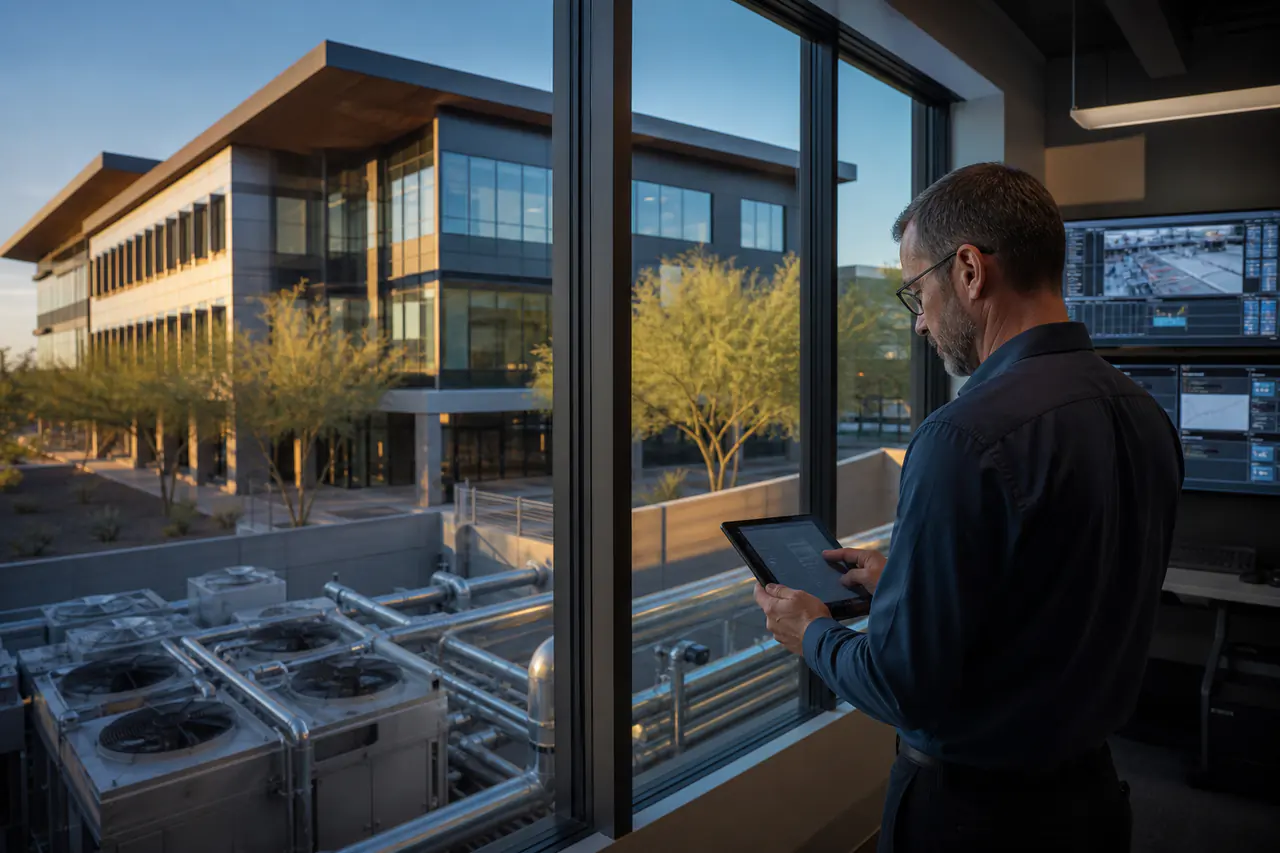
Phoenix buildings are cooling-dominated for most of the year, which changes where the value in a control system sits. Economizer strategy matters far less than it does in a mixed climate — outdoor air is usable for a narrower window — while condenser-water and chilled-water plant behaviour, staging discipline and peak-demand management matter considerably more.
The summer duty cycle is also unforgiving on equipment. A stuck damper or a failed actuator that would be a minor comfort issue elsewhere becomes an immediate problem here, and the margin for running a system on assumptions rather than trends is much smaller.
Peak demand is the other Phoenix-specific factor. On commercial rate structures, a single afternoon spike can set a demand charge that affects the bill for months. Control strategies that stage plant intelligently and avoid simultaneous restart after a schedule transition are worth real money here, not just kilowatt-hours.
Phoenix services
What we do for Phoenix facilities
- BAS assessments on existing Phoenix commercial buildings
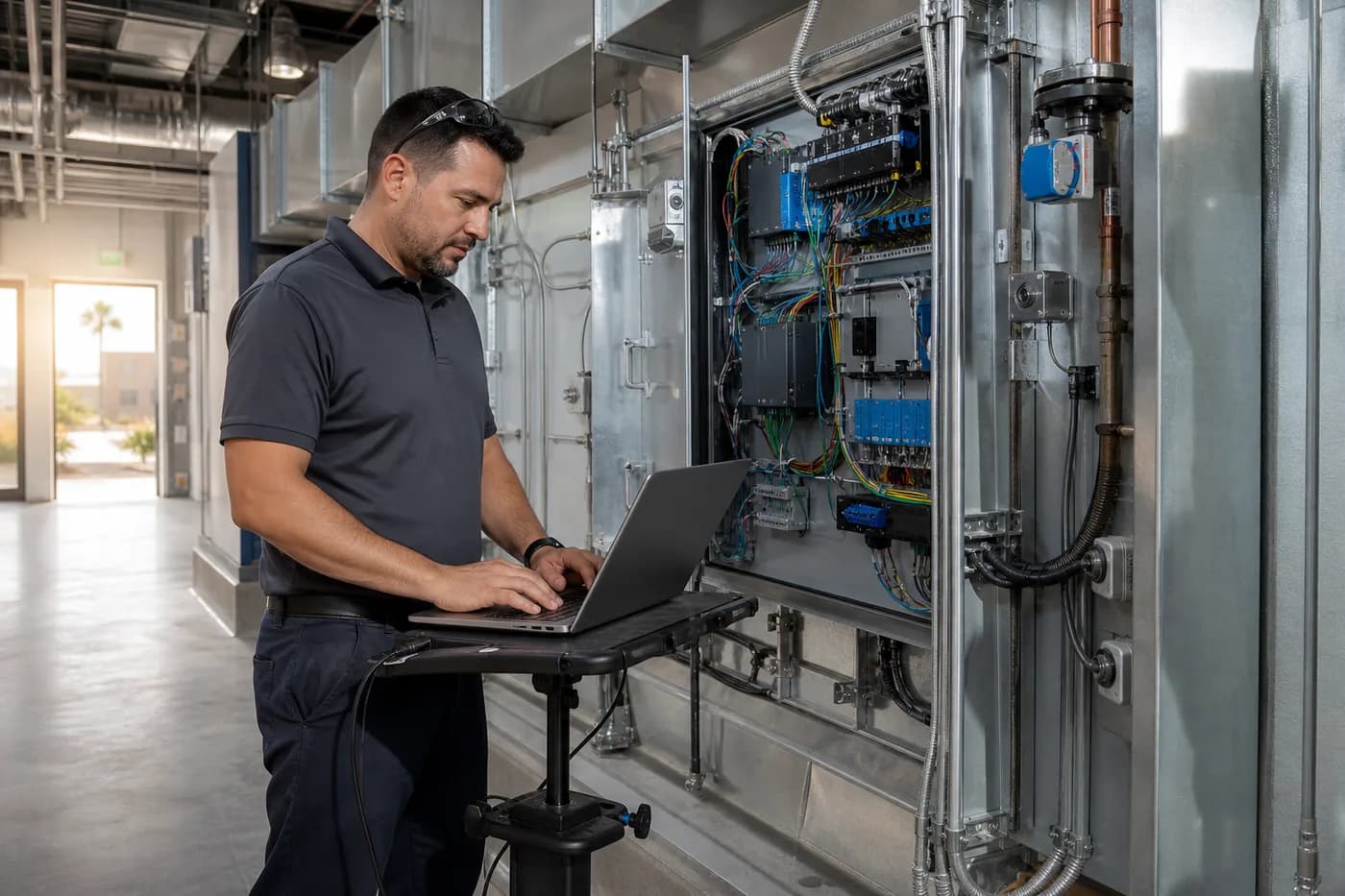
- Replacement of obsolete controllers and operator workstations
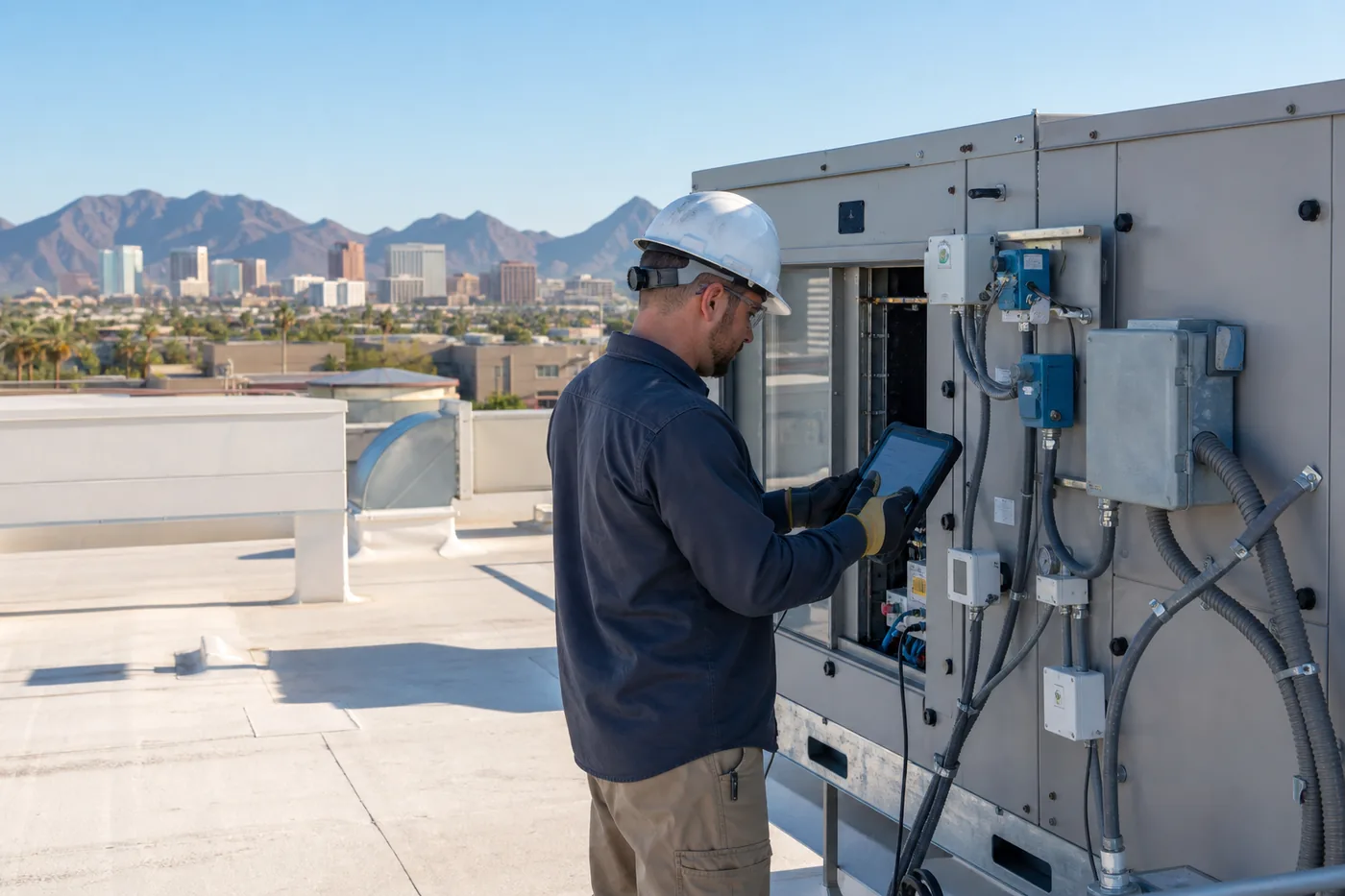
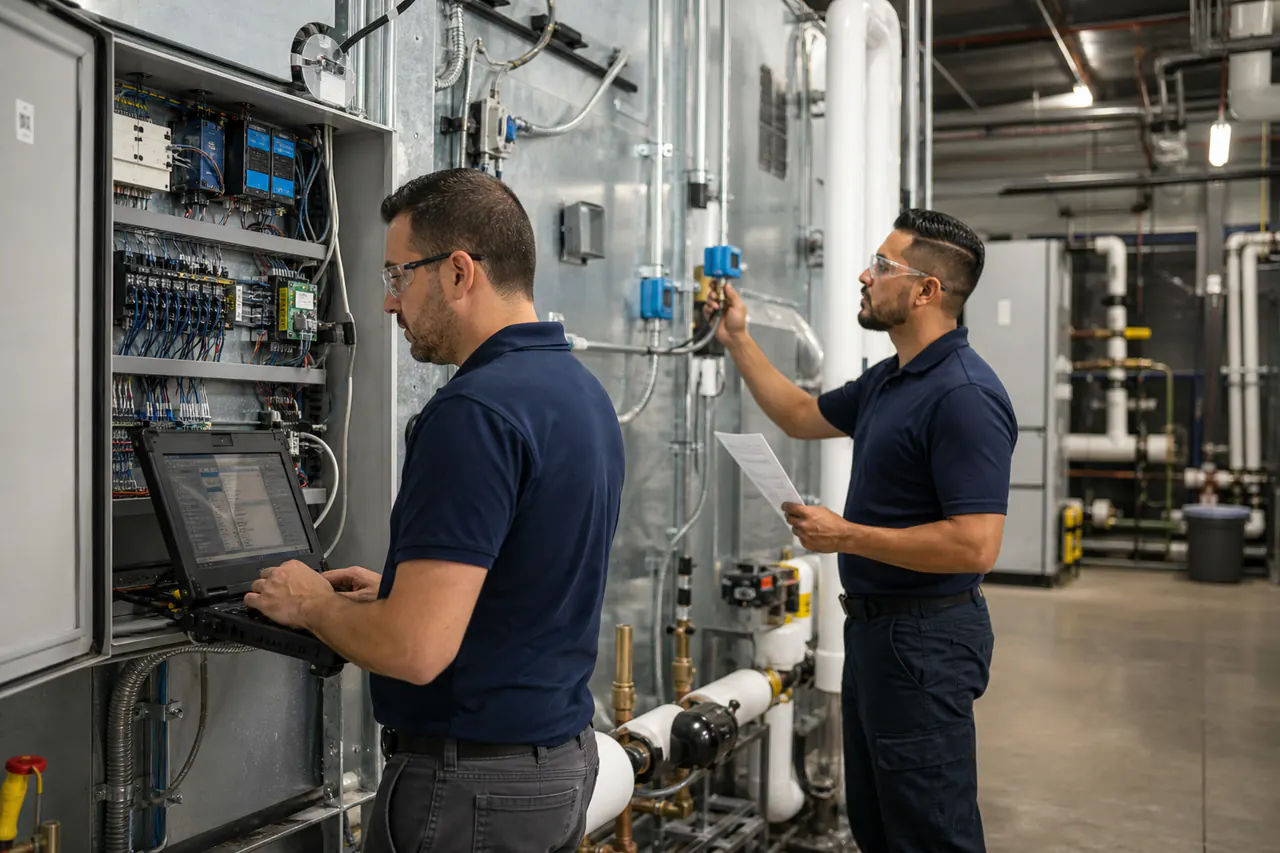
- DDC controls for RTUs, AHUs, VAV terminals and DOAS units
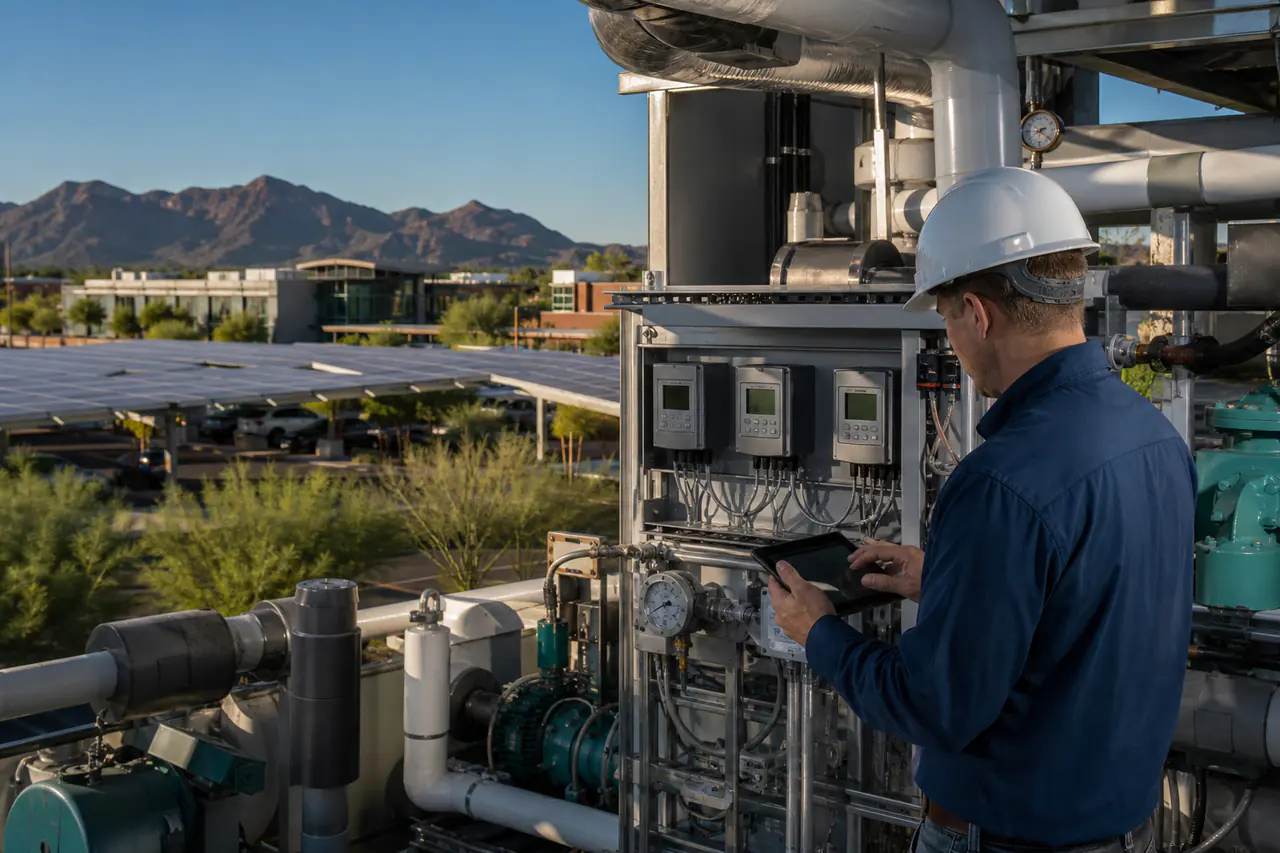
- Chilled-water and condenser-water plant control and staging
- Peak-demand and after-hours runtime strategies
- Multi-vendor integration across BACnet and Modbus equipment
- Lighting controls integration and schedule consolidation
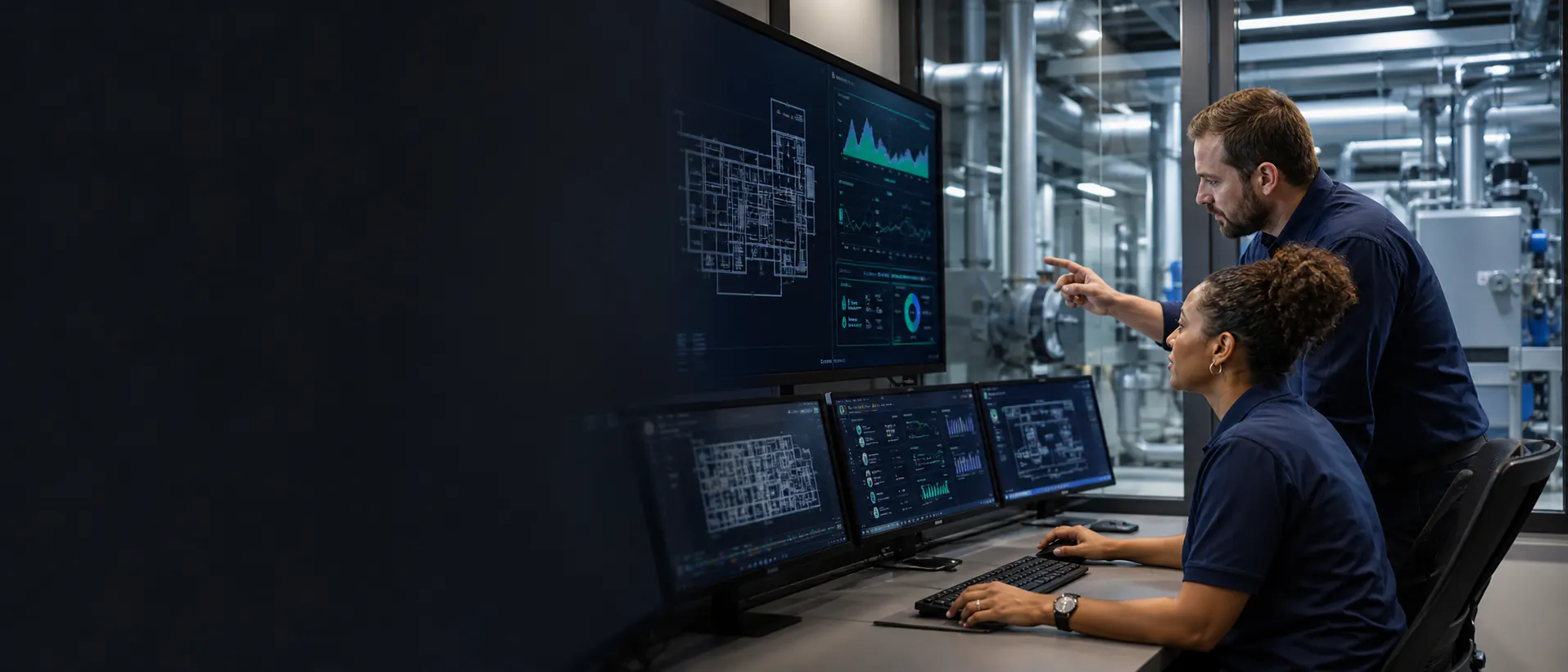
- Graphics, alarm and trend rebuilds on inherited systems
- Point-to-point checkout and functional performance testing
- Controls troubleshooting and comfort-complaint diagnosis
- Documentation rebuilds for buildings with no current record set
- Preventive maintenance and remote support
Sectors served
Phoenix-area facility types we work in
Commercial office
Central and Camelback corridor towers, suburban office parks, and multi-tenant buildings with constantly shifting occupancy hours.
Healthcare
Clinics, specialty facilities and hospital campuses across the Valley, where pressure relationships and documentation carry as much weight as comfort.
Industrial & distribution
Sky Harbor–area and West Valley facilities with exhaust, make-up air and process-adjacent HVAC requirements.
Education
District and charter facilities where academic calendars drive scheduling and summer shutdown is the working window.
Government & public
Municipal and county facilities where specification compliance, documentation and open protocols are procurement requirements.
Hospitality & multifamily
Resorts, hotels and multifamily common areas where central plant behaviour and amenity scheduling drive most of the runtime.
Common Phoenix calls
What Valley facility teams call us about
What you’re seeing
Cooling cannot keep up on the hottest afternoons, but the equipment looks fine.
How we approach it
We trend the plant, the air side and the affected zones together. This frequently resolves to staging thresholds, a chilled-water reset that is too aggressive for peak conditions, or airflow that was balanced for a different tenant layout.
What you’re seeing
The demand charge jumped and nobody knows why.
How we approach it
Usually a coincident restart — several systems coming out of setback at once — or a plant staging change made during a service call. Trend data over the billing period normally identifies the exact interval.
What you’re seeing
A tenant changed hours and now the floor is uncomfortable at 7am.
How we approach it
Optimal start and occupied schedules reviewed against the new hours, plus a check that any override put in as a workaround has been cleared.
What you’re seeing
The BAS was installed by a contractor who is no longer in business.
How we approach it
We identify the platform, assess what can still be supported, and give you a realistic view of whether to maintain, migrate or replace — with the documentation rebuilt either way.
What you’re seeing
Rooftop units are short-cycling through the summer.
How we approach it
Staging, minimum runtimes and setpoint deadbands reviewed on the actual units, along with sensor calibration. Rooftop sensors in Phoenix drift faster than most people expect.
What you’re seeing
Lighting and HVAC schedules disagree after a tenant improvement.
How we approach it
We rebuild both schedule sets against current occupancy and, where the lighting platform supports it, integrate them so the disagreement cannot recur.
Coverage
Phoenix metro and nearby
Alongside Phoenix itself we work across Scottsdale, Tempe, Mesa, Chandler, Gilbert, Glendale, Peoria, Goodyear, Avondale, Surprise, Buckeye, Queen Creek and Paradise Valley. Southern Arizona work is covered from our Tucson page, and statewide capability is described on the Arizona building automation page.
For Phoenix service and troubleshooting specifically, see building automation service in Phoenix. For lighting controls, see commercial lighting controls in Phoenix.
Questions
Frequently asked questions
Related capabilities
- Building Automation Service PhoenixTroubleshooting and repair
- Commercial Lighting Controls PhoenixPhoenix lighting controls
- Arizona Building AutomationStatewide capability
- Controls Retrofits & BAS UpgradesReplacing obsolete systems
- Energy ManagementDemand and runtime strategy
- Arizona Service AreasFull coverage map
Next step